
• Search
  • Facebook
  • Instagram
  • BlueSky
  • LinkedIn
  • RSS
  • CZ
  •  

logo karlova univerzita

Charles University Magazine

  • Vyhledat
  • Facebook
  • Instagram
  • BlueSky
  • LinkedIn
  • YouTube
  • RSS
  • CZ
  •  
  •  
  • News
  • Science
  • Students
  • Unilife
  • Insight
  • Podcast

logo karlova univerzita

Magazín Univerzity Karlovy

  • Vyhledat
  • Facebook
  • Instagram
  • BlueSky
  • LinkedIn
  • YouTube
  • RSS
  • CZ
  •  

Charles University Magazine

Sections

  • News
  • Science
  • Students
  • Unilife
  • Insight
  • Podcast

Features

  • Videos
  • Photos
  • Interviews
  • Stories
  • Analysis

Categories

  • CU sports
  • Volunteers
  • Online learning
  • Czexpats
  • Humans of CU
  • Women of CU
  1. Home
  2. Main Categories
  3. Unilife
  4. Talking Economics Podcast: Understanding Discrimination

Talking Economics Podcast: Understanding Discrimination

Wednesday, 26 November 2025

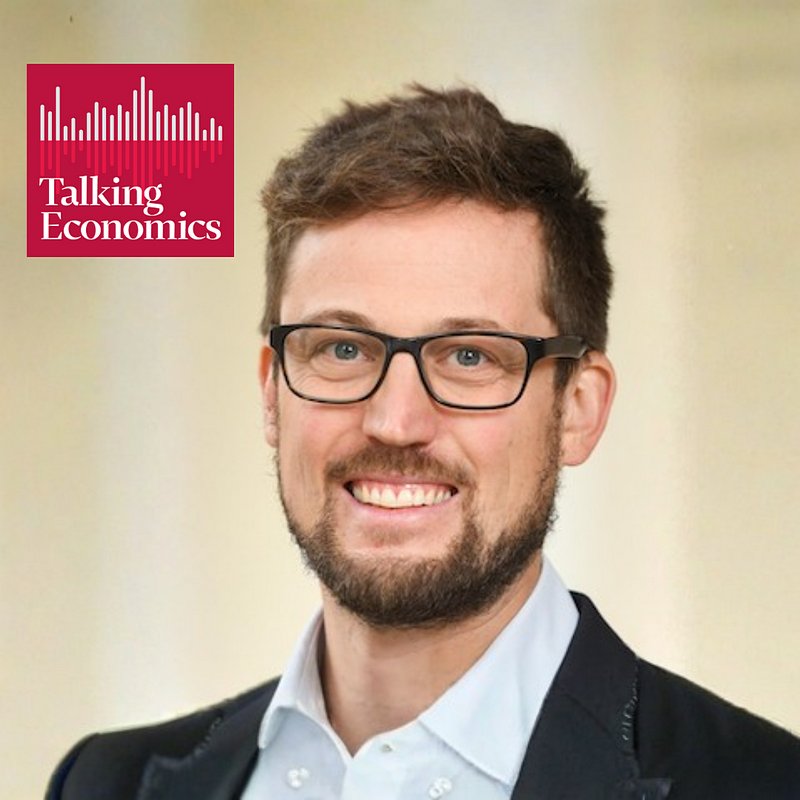
Why does discrimination persist even when it’s costly for firms and societies? In this episode of Talking Economics, CERGE-EI alumnus and University of Milan Associate Professor Vojtěch Bartoš explains how behavioral economics helps uncover the mechanisms behind bias – and how evidence-based tools can help reduce it.

Discrimination, as he explains, occurs when two otherwise identical individuals are treated differently based solely on a group attribute – for example, race or gender. “When equally qualified people are paid differently or denied opportunities, society wastes talent and firms lose potential profit.”

Vojtěch argues that discrimination persists for two main reasons: historical roots and information bias. Early humans relied on visible traits to distinguish “us” from “them,” a reflex that still shapes behavior today. In modern settings, people often act on stereotypes or incomplete information – what economists call statistical discrimination.

Behavioral economics, he says, helps explain how beliefs and biases are formed and updated. “People interpret new information through the lens of their existing stereotypes,” Vojtěch notes. 

Looking ahead, Vojtěch highlights promising ways to “break bias.” In a forthcoming book chapter, he explores interventions that combine insights from economics and psychology. “Providing more information, using anonymized applications, or fostering cooperative contact between groups can all help reduce discrimination,” he explains.

Discrimination, Vojtěch concludes, has deep historical and cognitive roots, but understanding its mechanisms is the first step toward change. “There is light at the end of the tunnel,” he says. “We’re finding that even small, well-designed interventions can make a difference.”

Related items

Podcast: About the sanctions imposed on Russia - then & now
Podcast: Increasing interest rates to fight high inflation
Podcast: Household financial choices
Story by:
Lenka Miklánková
Photo: CERGE-EI
  • CERGEEI
  • Talking Economics Podcast

Photogallery

Share the article:

Bluesky
Vědavýzkum.cz
UNICEF Česká republika
Vesmír.cz
Česká televize
ČTK
Český rozhlas
Aktuálně.cz
Finmag
Novinářský inkubátor
Universitas - magazín vysokých škol
Lidové noviny
Czexpats in Science
›
‹
Magazín Univerzity Karlovy

Email: forum@cuni.cz

Phone: +420 224 491 248

Ovocný trh 3–5, 116 36 Praha 1

  • Contacts
  • Author guidelines

Sections

  • News
  • Science
  • Students
  • Unilife
  • Insight
  • Podcast

Features

  • Videos
  • Photos
  • Interviews
  • Stories
  • Analysis

Categories

  • CU sports
  • Volunteers
  • Online learning
  • Czexpats
  • Humans of CU
  • Women of CU

ISSN 1214-5726 (printed version ISSN 1211-1724) Publishing or redistribution of content is prohibited without prior approval.
©2012–2026 Charles University / webdesign Agionet s.r.o.