

He is one of only ten scientists working in Europe who secured the prestigious EMBO Installation Grant this year. After four years in the United States, immunologist Matouš Vobořil recently returned to the Faculty of Science at Charles University to build his own team and advance research focused on the development of immune cells and their training in the thymus. His efforts to combat autoimmune diseases have already caught the attention of numerous grant review panels.
Reportedly, one of the motivations for your studies was the awareness that in science, there is still more that is unknown than what is known. You made this statement after receiving the Doctorandus Award for Natural Sciences in 2020, adding that during your lifetime you would like to shift something toward the “known” category. How has that been going so far?
The topic for which I take the greatest credit to date is one I began exploring during my doctoral studies and fully developed as a postdoctoral fellow in the U.S., and that is inflammation of the thymus. When you delve into the literature and articles focused on autoimmune diseases, eventually you begin to notice that autoimmune diseases often develop after undergoing some kind of infection. This is particularly evident in connection with long COVID. During inflammatory processes in the body, the immune system responds, and we were interested in whether there is a mechanism that recognises this inflammatory response and teaches T-lymphocytes (immune cells) that this is not a problem, but rather a process inherent to the body.
During my doctoral studies, I investigated the basic inflammatory response in the thymus, without the presence of actual bacterial or viral inflammation. This turned out to be extremely important. Over time, we discovered that the thymus contains many antiviral molecules and molecules that play a key role in allergic reactions or in the recognition of bacteria and viruses. These molecules create a specific environment in the thymus that mimics what may happen in our bodies later in life, and they train T-cells not to respond to these stimuli. I consider this to be my greatest contribution to the field. Of course, there are still many unexplored areas in this field.
The interview I was referring to was published in the magazine of the grammar school where you studied, and which proudly acknowledges your scientific achievements. Was that where your interest in science first began to show?
The fact that I studied in Dvůr Králové nad Labem was a huge stroke of luck. Not only is there a zoo, where my parents used to work, so I spent a lot of time there, but thanks to that, I also joined the local Natura club, which brought together people interested in nature and was led by the Dobroruk couple. When I was ten, my parents sent me to a nature-oriented summer camp with them, and I ended up staying with them – which is why I also attended the local high school, where Mrs. Dobroruková taught. She was a wonderful teacher. Her classes really encouraged students to think about what’s happening in nature. Thanks to that, I began participating in biology competitions and got involved in the Czech high school research competition. Although my first scientific experiments focused on ornithology, they gave me the opportunity to present scientific data and meet many people from the Faculty of Science at Charles University, including Professor Jan Černý, who lectured our class on immunology. Suddenly, while still in high school, I realized that this was the path I wanted to take.
During your master’s studies, you joined the team of immunologist Dominik Filipp at the Institute of Molecular Genetics of the Czech Academy of Sciences, where you then continued as a doctoral student. How did working with him influence you, and where did it lead you?
Dominik Filipp had several ongoing projects related to the peripheral immune response, signalling, and identification of viruses and bacteria. The project I worked on focused on a rare population of cells found in lymph nodes or the spleen. I studied the effect of pathogen-recognising receptors on these cells. Since these cells are similar to those in the thymus and I needed a negative control, I used the thymus for that purpose. To our surprise, the result was not negative but positive. This led us to the phenomenon itself and prompted us to begin investigating its consequences in the thymus.
You then travelled overseas to study this discovery – which you actually made rather by chance – in detail. What was your experience like at American research institutions?
Amazing. I went to the University of Minnesota to work with particular people, especially my future supervisor, Kristin Hogquist. I had met her at several conferences while I was still in my PhD programme, and I had a feeling that our collaboration could work well both professionally and personally.
But we were also fortunate to pick Minnesota. It’s a great place to live, and at the same time, excellent science is being conducted there. The Center for Immunology, where I worked, rivals the world’s leading scientific institutions in terms of its research results. I think this is mainly down to the highly supportive environment there, which fosters collaboration. Thanks to this, you can really grow as a scientist there.
In addition, they focus on explaining and describing the chosen phenomenon as a whole, rather than worrying too much about whether it will result in one or five articles, or whether it will take ten years. Their method of funding supports this approach. In a system of short-term grants, as we know it here, you can’t structure research this way. That’s a major disadvantage for us.
How did you develop your own research there?
It was there that I fully realized the potential of what we had discovered in the lab in Prague. Kristin Hogquist and her team were working on something similar, but it wasn’t until we teamed up that we were able to take it further. I focused primarily on how various antiviral signals or signals triggered during allergic reactions influence T-cell training and defence against autoimmune diseases following viral infections or allergic reactions. Suddenly, it became clear that this was a vast topic and the foundation for establishing a separate subfield of research on tolerance (the training of immune cells in the thymus so that they do not harm the body while remaining capable of fighting pathogens).
One great thing was that two labs were coming together at the facility: the one led by Kristin Hogquist and the other led by her husband, Stephen Jameson, which focuses on how different types of infections affect T-cell activation and their response. I realised that these two areas needed to be connected, and I based my own research plan on that – namely, to study how the inflammatory environment, actual inflammation, and viral or bacterial infections can retroactively influence processes in the thymus. This is a topic that no one has addressed yet.
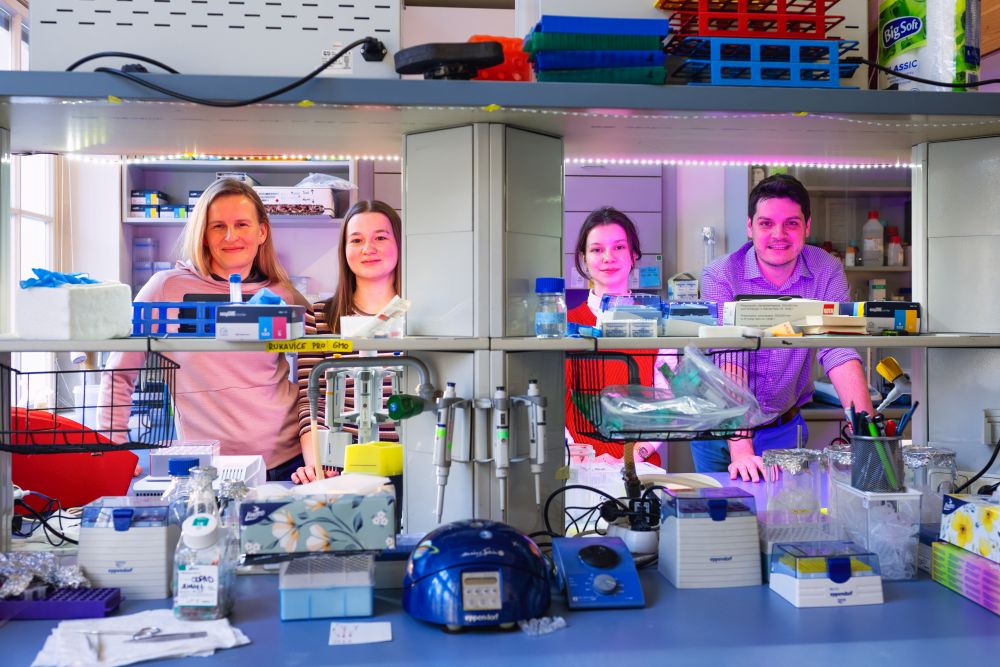
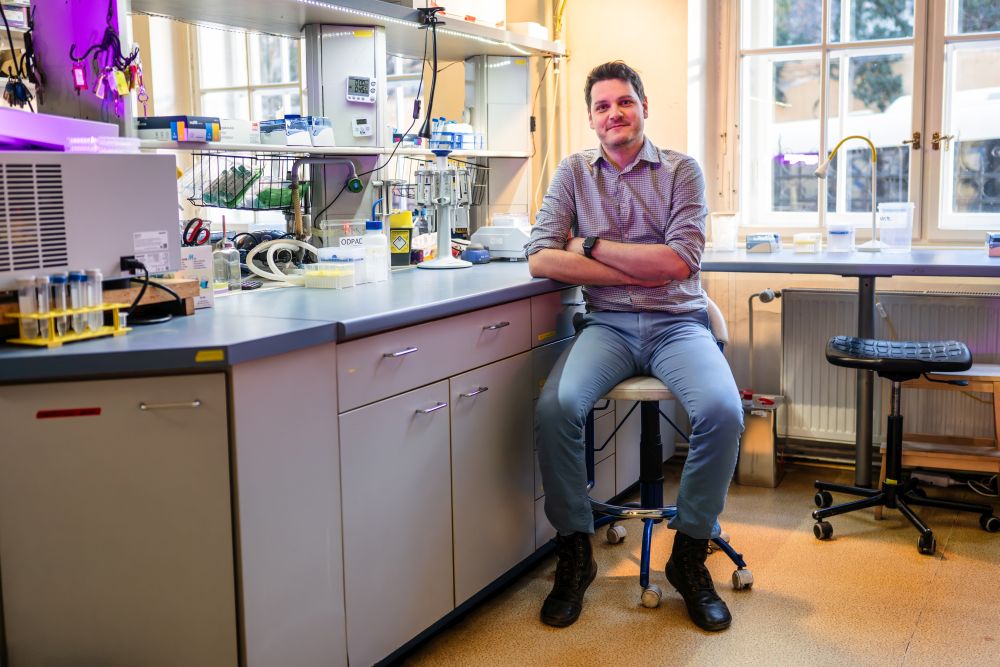
As head of research, Matouš Vobořil strives to ensure that everyone on his team feels comfortable.
You mentioned how important it was to you that you got along with Kristin Hogquist not only professionally but also on a personal level. To what extent did you take this “personal” aspect into account when putting together your own team at CU SCI?
This is tremendously important to me. Kristin Hogquist is not only an outstanding researcher, but also a very kind person. And that really helped me feel at home in the American environment, which sometimes tends to become highly competitive. I realized that I would like those who will one day work on my own team to feel the same way I did on hers.
So far, we’ve been talking about what led you to science. Have you, on the other hand, encountered anything during your career so far that has discouraged you from pursuing science?
Moving overseas with my family and my two-and-a-half-year-old son during the pandemic wasn’t the easiest thing to do. We had to apply for a national exemption just so that I and my family would be allowed into the U.S. at all. Fortunately, as an immunologist, I fell into a special category subject to less stringent pandemic restrictions. Packing up the family, moving overseas, and learning to navigate a completely different system is undoubtedly a major challenge. It required sacrifices not only from me, but above all from my wife, who had to put her own career on hold for several years because of mine. This is one of the biggest and most demanding obstacles that scientists and their families must overcome.
The second major obstacle you have to deal with as a scientist is paperwork – something I’ve only fully realized now that I’m leading a research group. Even though you hear about it from those around you, it still doesn’t prepare you for when it comes. As a trainee, you do science and conduct experiments in the lab, but suddenly everything shifts, and you become a manager and administrator of all sorts of things. I spend about 30 percent of my time on paperwork. It’s not exactly fun.
You obtained a Primus grant, a Junior Star grant from the Czech Science Foundation, and most recently an EMBO Installation Grant. What research challenges do you now face with these grants?
I would also like to apply for an ERC Starting Grant this year as well. In the Junior Star project, we are studying cell migration to the thymus. We hypothesize that so-called dendritic cells migrate to the thymus from the periphery (skin, lungs, intestines) – that is, from sites exposed to the external environment and inflammation. These cells are thought to bring information about their own antigens to the thymus and teach developing T-cells tolerance. We aim to determine whether this migration actually occurs, under what circumstances, and how important it is for establishing tolerance to specific tissues. This could help answer the question of why autoimmune skin diseases, such as psoriasis, develop following inflammatory processes.
The second objective is broader. We would like to answer a major question in immunology: why do autoimmune diseases develop after a person has had an infection? We want to study how different types of inflammation (viral, bacterial, or yeast infections) affect the training of immune cells in the thymus.
We would like to introduce a system of so-called “dirty mice.” The entire field of immunological research is based on working with mice raised in sterile conditions so that we can easily manipulate them and observe how these manipulations affect the immune system. In reality, however, the immune system does not function this way. I brought this idea back from the University of Minnesota, where they placed standardized mice in the same cage with mice purchased from various pet stores around Minneapolis. After a few weeks to months, the mice contract almost everything the store-bought mice have, thereby developing a true physiological immune response. Yet they are still the same mice – genetically identical – that we can manipulate. This is an excellent system that allows us to study immune responses in a much more physiological context.
Will you be applying for a European Research Council (ERC) grant with that goal in mind?
Exactly.
In order to succeed in the competition for ERC grants, the projects should push the boundaries of knowledge, which also involves a certain degree of risk. Where do you see the greatest risks in your own research?
There are many risks. One of the biggest is that although all the infections we plan to introduce are controlled and well-documented, you still never have full control over them. So it’s possible that not only will the mice become peripherally infected, but the thymus itself will also become infected, which could complicate the experiments. At the same time, this is a physiological system – and I’m talking mainly about the “dirty mice” – which means that each mouse will respond a little differently, and that will generate enormous variability in the samples. Immunologists strive to have the purest system possible, so that when they introduce, for example, a single infectious agent, they can then observe exactly what’s happening there. In this regard, we are actually taking a step back, so to speak, because we want it to be more variable and closer to reality. Setting up and analysing data from such experiments so that they’re reproducible and reveal a real phenomenon can be a real challenge. But that’s the only way we can get closer to real life.
The most recent Nobel Prize in Physiology or Medicine was awarded to three immunologists: Mary E. Brunkow, Fred Ramsdell, and Shimon Sakaguchi, who recently gave a lecture in Prague. Did you meet him? How much did awarding the Nobel Prize to immunologists motivate you further in your work?
When Shimon Sakaguchi was in Prague, I was still in the U.S., but I did meet him several times at various conferences and even had the opportunity to talk with him on multiple occasions, given that we’re both involved in T-cell research. In our community, people have long been placing bets on when they’ll finally get the Nobel Prize. For me, their discoveries are truly inspiring, but the Nobel Prize itself doesn’t motivate me that much anymore. I find the story behind it to be more interesting. It took a very long time for the scientific community to accept their findings. One of the seminal articles was published in the Journal of Immunology, which isn’t a journal with as high a profile as Nature or Science, and not one where you’d expect to read about such a groundbreaking discovery. It took several years before it became clear just how significant this discovery was. Now I often remind my students of this – even an article in the Journal of Immunology can win you a Nobel Prize, and that is incredibly inspiring.
| Matouš Vobořil, PhD |
| Graduate of the Faculty of Science at Charles University. His research focuses on the development of immune cells in the thymus, the onset of autoimmune diseases, and the function of antigen-presenting cells. After spending four years as a postdoctoral fellow at the University of Minnesota on Kristin Hogquist’s team, he returned to Europe in 2025. Thanks to a Primus grant from Charles University, he established his own research group at the Faculty of Science. He subsequently received a Junior Star grant from the Czech Science Foundation and, this January, an EMBO Installation Grant. For his dissertation, he was awarded the Doctorandus Prize as part of the Česká hlava initiative. |