

When a tennis player prepares to return a serve, or a boxer slips a punch, a lay observer sees speed above all else. Fast hands, fast feet, a fast reaction. Yet neuroscientist Ryo Koshizawa, from Japan’s Nihon University, is interested in something that happens even earlier: in the first fractions of a second, when the eyes and brain process the direction, speed and future location of a moving object.
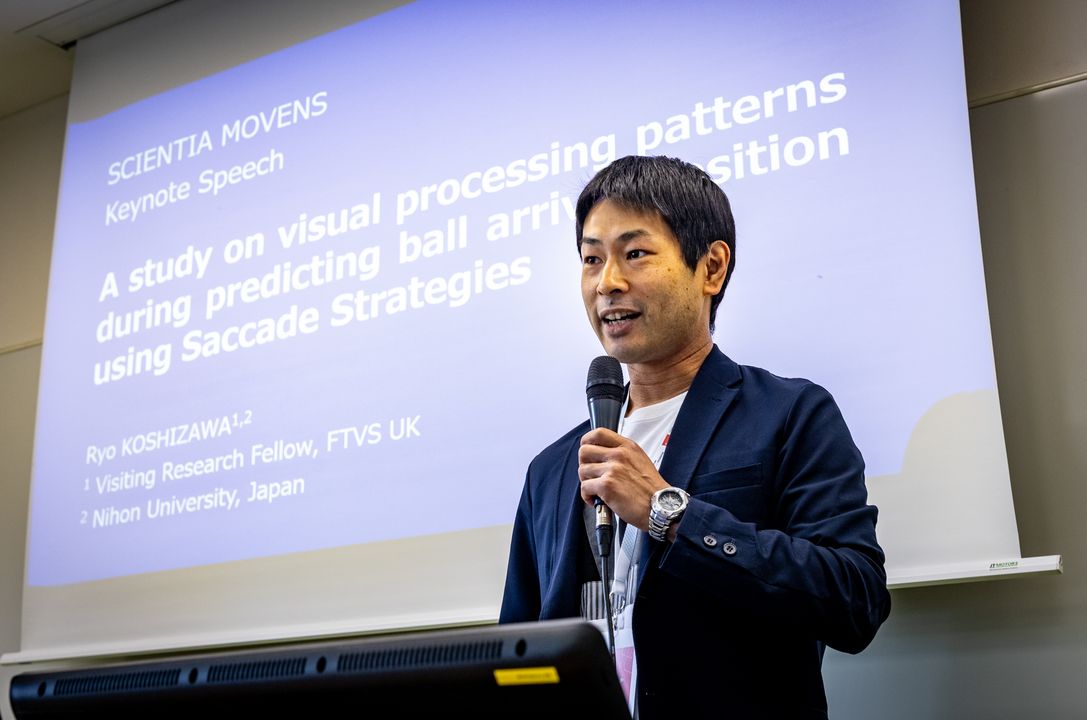
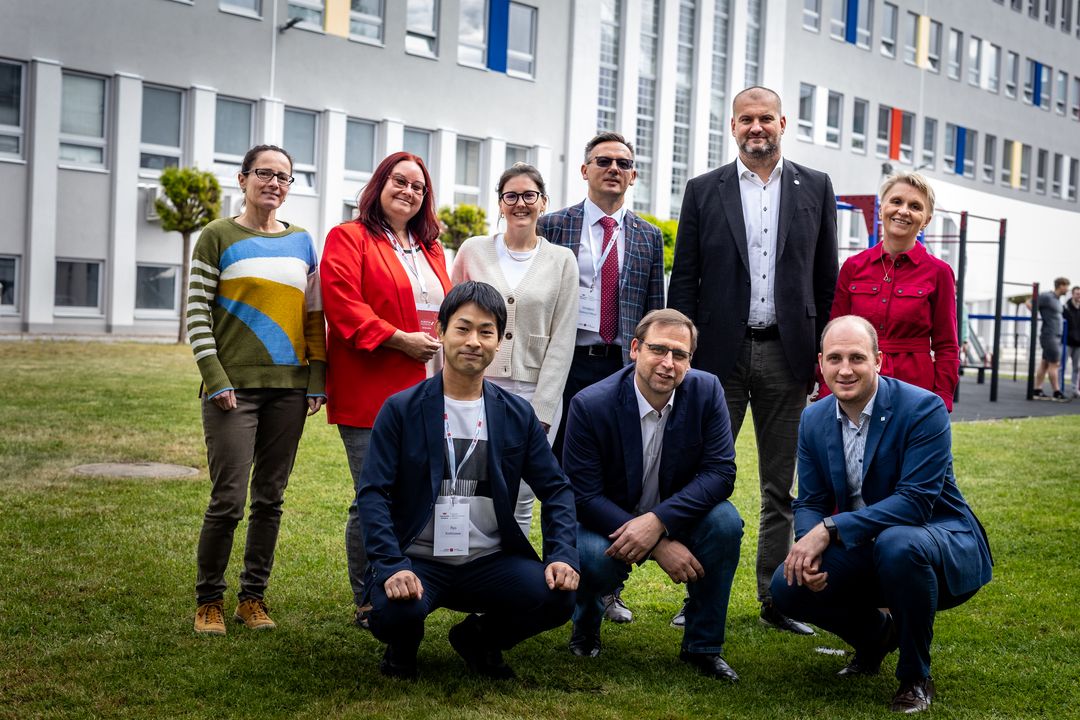
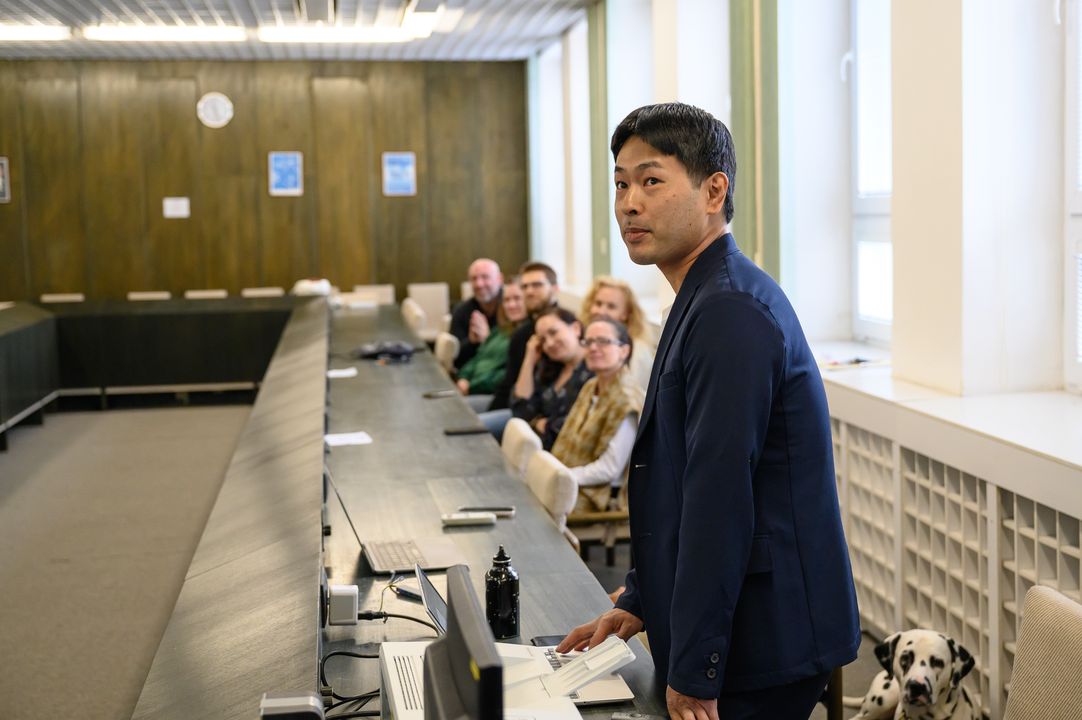
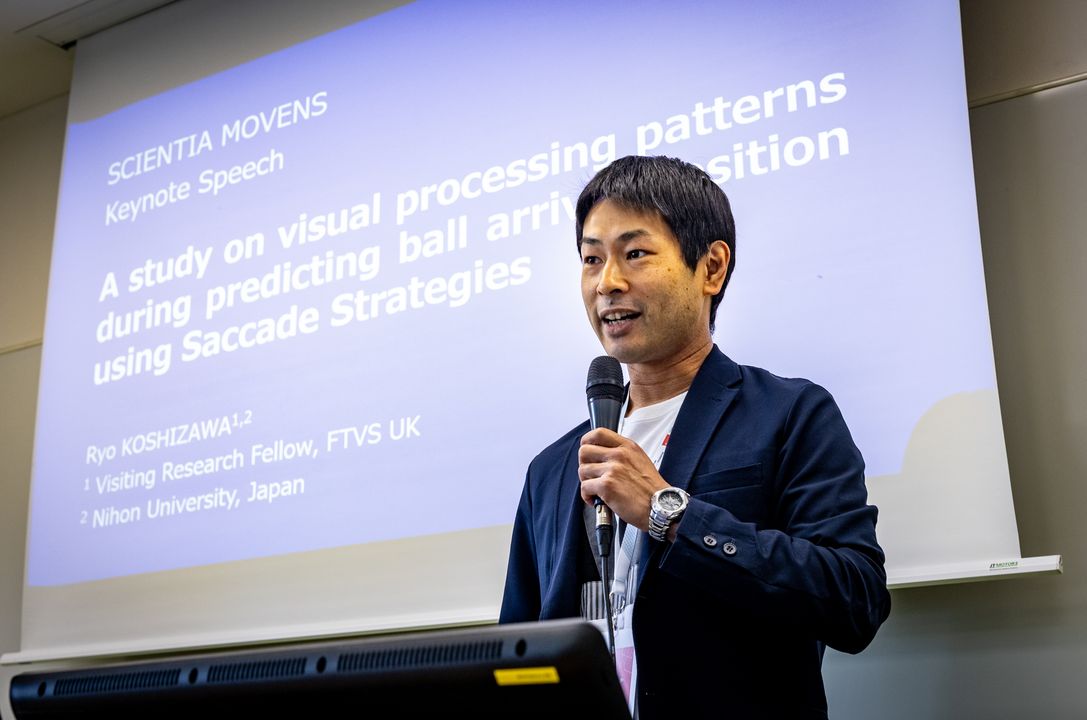
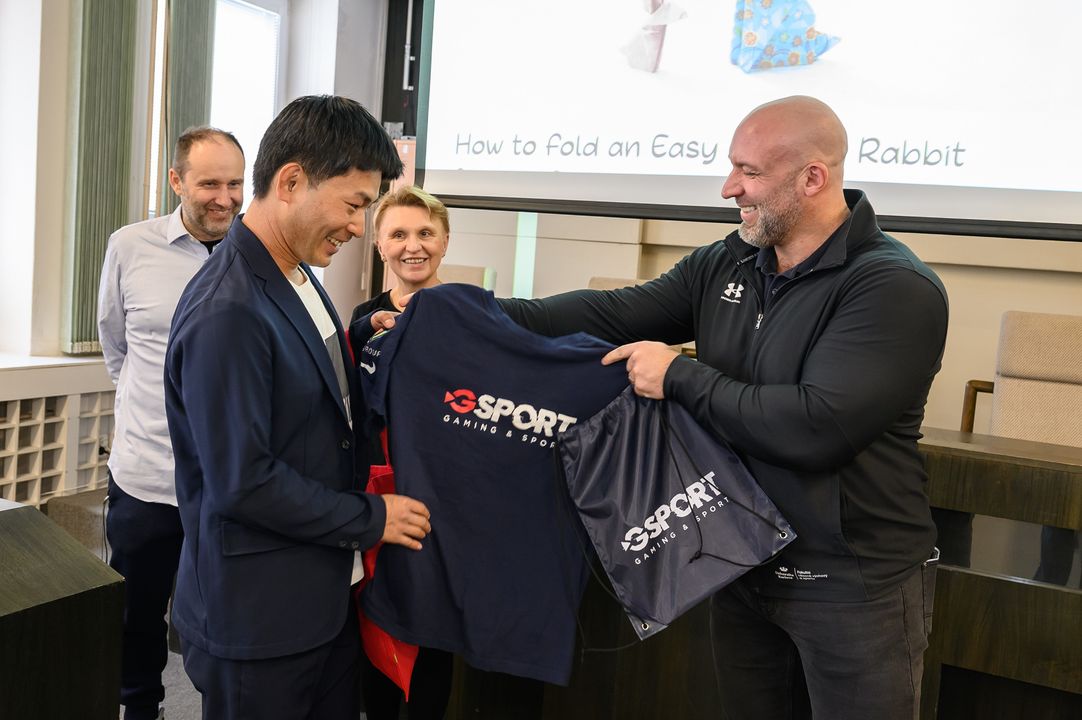
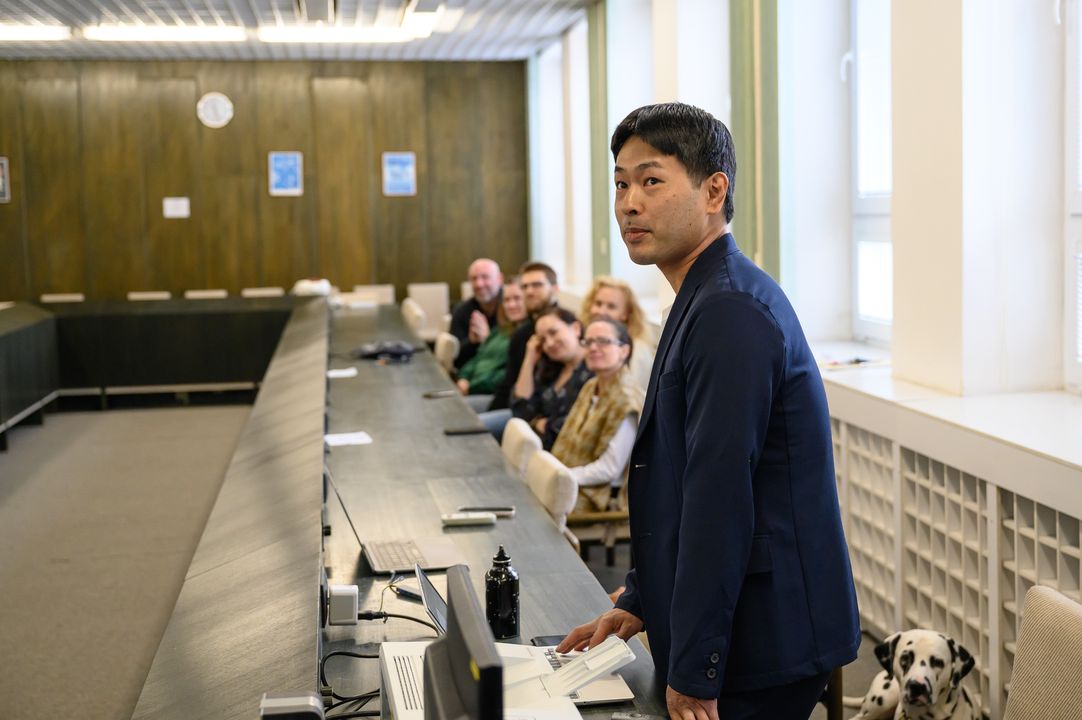
“My main field is neuroscience, especially EEG and gaze tracking,” explains the affable Ryo Koshizawa, who spent a year as a visiting research fellow at the Faculty of Physical Education and Sport, Charles University (CU SPORT). He came to Prague with a topic that brings together sports neuroscience, visual perception, measurements of brain activity and, increasingly, esports. He is interested in how a person predicts the place where a ball will land or arrive. In scientific terms, he studies visual processing in the estimation of the target position of a moving object using saccadic strategies. This was also the subject he presented in his keynote lecture at the faculty.
Gaze dynamics through the eyes of science
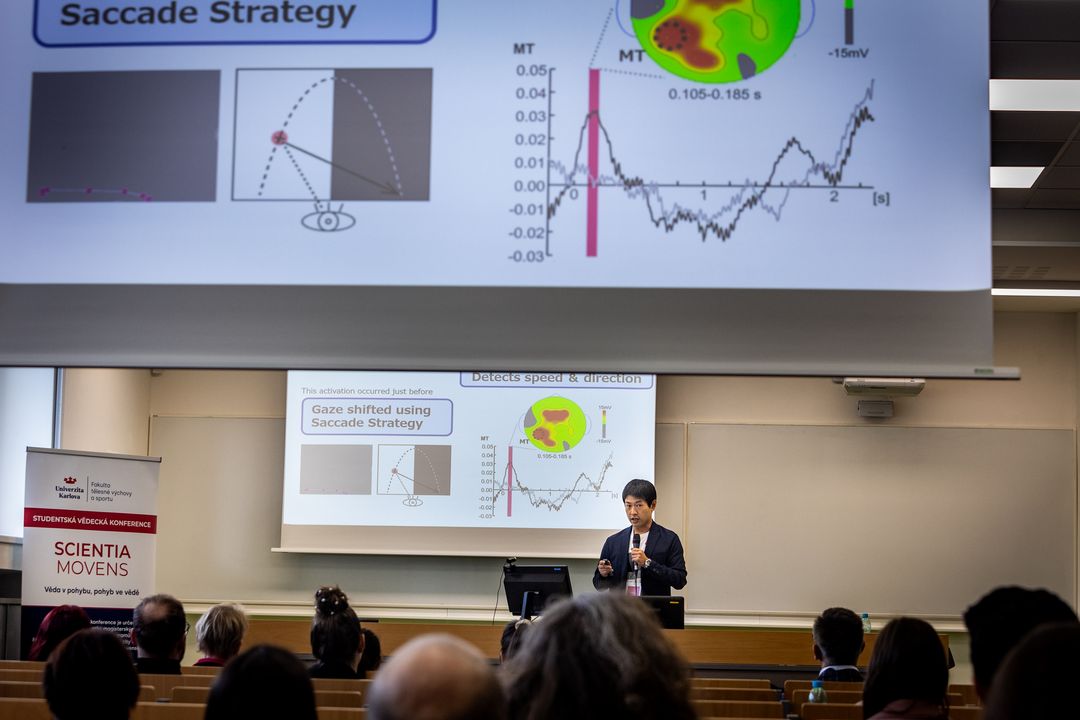
A saccade is a rapid, jumping movement of the eye. We make such movements many times a minute without noticing them. In sport, however, they can determine success. When a ball is moving too fast, the eye cannot follow it smoothly and precisely along its entire trajectory. So the brain does something more economical and more intelligent. From the first information available, it estimates the trajectory and sends the gaze to the place where the object has yet to appear. The athlete is therefore not looking only at the present. In a sense, they are looking into the near future. Ahead.
Ryo Koshizawa studies this principle in the laboratory using a task that resembles a computer animation. A ball moves across a screen along a parabolic path. At a certain point it disappears, and the participant in the experiment must estimate as accurately as possible where it will arrive. An eye-tracker records gaze patterns, while EEG measures the brain’s electrical activity. The researchers are not interested only in whether the participant chooses the correct location. They also observe when the gaze shifts, what strategy emerges and how the brain is activated at that moment. Koshizawa describes a similar experimental logic in his presentation and in studies devoted to predicting the target position of a moving object.
“Participants are not simply supposed to track the ball. They are supposed to predict where it will arrive as early as possible,” explains Koshizawa. This is where the difference between ordinary observation and sporting performance becomes clear. It is not enough to wait until the information reaches the end of the trajectory – the brain has to work with an incomplete image and nevertheless produce a prediction that is accurate enough.
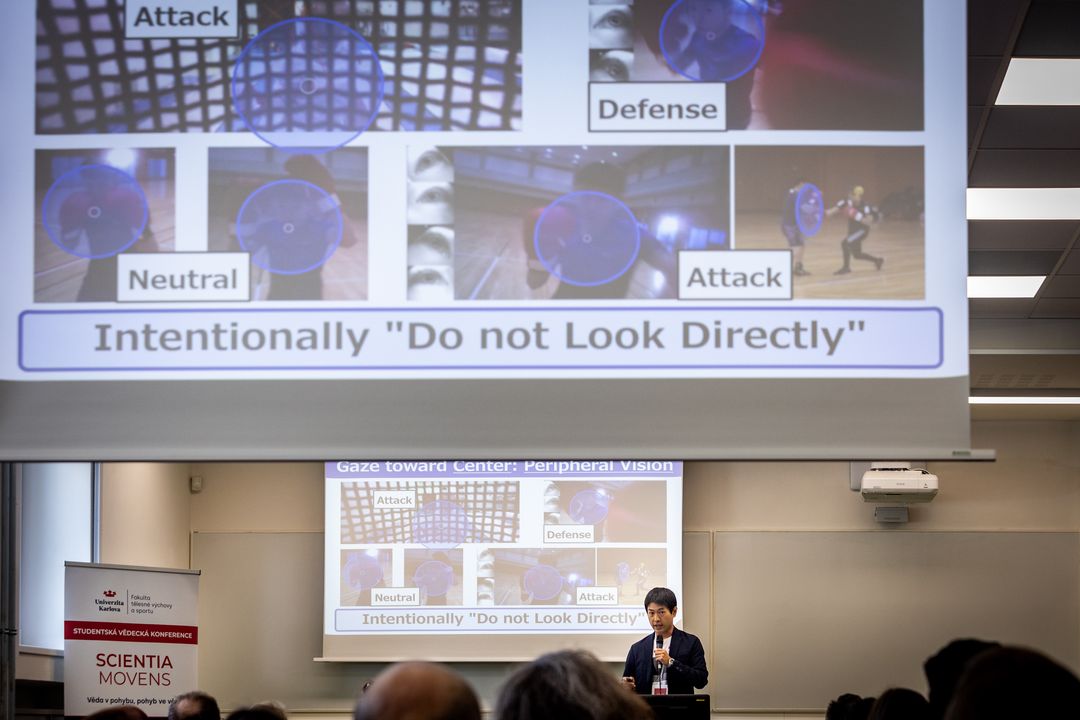
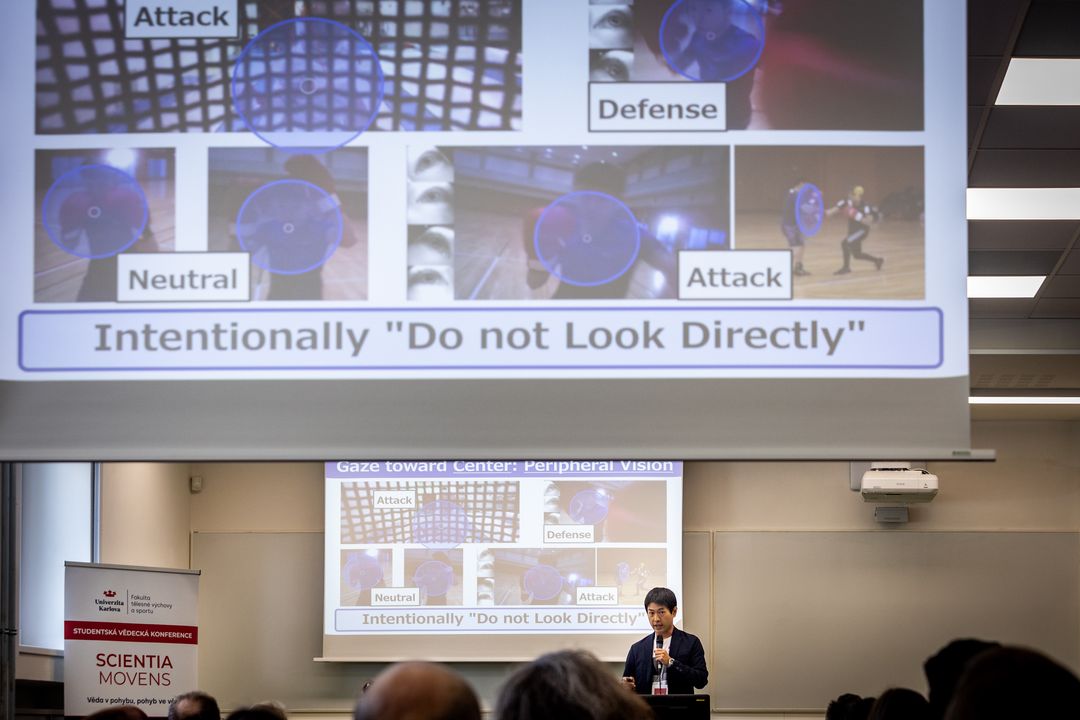
Podobné principy lze vidět u elitních sportovců. Košizawa ve své pražské přednášce ukazoval šermíře a boxery světové úrovně. A upozorňoval, že se často nedívají přímo na zbraň, ruku nebo hlavu soupeře, ale pohled drží spíše ve středu těla a využívají periferního vidění. „Nedívají se úplně přímo,“ dodává. Nejde o nedostatek pozornosti, ale o cílenou strategii. Přímý pohled na jednotlivý detail může být zrádný, zvlášť když soupeř používá „finty“. Stabilnější pohled do středu umožňuje získat širší a celistvější obraz situace, a nenechat se tak snadno oklamat.
Shaped by boxing and baseball
Ryo has a personal connection to sport. “My favourite sports are baseball and boxing. I did both myself. I was a boxer, although not a particularly strong one,” he says with a smile. Baseball is one of Japan’s major sports, while boxing gave him direct experience of how important it is to read an opponent before their movement fully unfolds. His research, however, is not limited to traditional sporting environments. On the contrary, one of the reasons for his stay in Prague was the development of esports at the Faculty of Physical Education and Sport.
At first glance, the connection between sports neuroscience and computer games may seem surprising. Koshizawa points out, however, that a top esports player also deals with exceptionally demanding visual tasks. In an extremely short time, they have to monitor a scene, estimate the movement of opponents, plan their own response and maintain accuracy. “World-class esports competitors are very talented. It is not just an ordinary game,” he says. This does not mean that esports are the same as traditional sport. But from the perspective of rapid visual processing, prediction and decision-making, they raise remarkably similar questions.
A study with Czech collaboration
A new study published in Frontiers in Systems Neuroscience in 2026, with Ryo Koshizawa as primary author and with contributions from Zdeněk Ledvina, Jakub Pospíšil and Ondřej Peleška from the Faculty of Physical Education and Sport, focused precisely on players of first-person shooter games, or FPS games.
The research compared six FPS-specialist players with eleven active players without such specialisation. Participants completed a task involving the prediction of the target position of a parabolically moving object that was occluded during its trajectory. The study monitored gaze behaviour, estimation accuracy and EEG activity in the low beta band. The results suggest that FPS-specialist players initiated predictive gaze shifts earlier and estimated the target position more accurately. They performed better. Differences also appeared in brain activity in areas associated with spatial prediction, visuomotor integration and movement planning. The authors concluded that experience with competitive FPS games may support a coordinated visuomotor prediction system that enables earlier and more accurate saccadic behaviour.
For science, esports are interesting for another practical reason as well. In real-world sport, it is often difficult to obtain clean EEG measurements. Esports players move far less during performance, yet their brains are still dealing with fast visual and decision-making situations. Koshizawa sees this as an important advantage: less movement means less distortion in the EEG signal, and therefore a better opportunity to observe the neural mechanisms themselves and understand what is happening.
Praise for the Prague environment
The Faculty of Physical Education and Sport also offered a suitable environment for this collaboration. Its Centre for Esports is developing as a workplace that connects gaming, sport and education. Among other areas, it focuses on players’ physical preparation, digital competencies, healthy and sustainable gaming, and projects that link game principles with bodily movement. For Koshizawa, this was an important signal. “I found information that a newly focused centre for esports had been established at the Faculty of Physical Education and Sport. I contacted Vice-Dean Lenka Henebergová and Zdeněk Ledvina in Prague, and later became part of the local team,” says the Japanese researcher, whose stay was supported by his home institution, Nihon University.
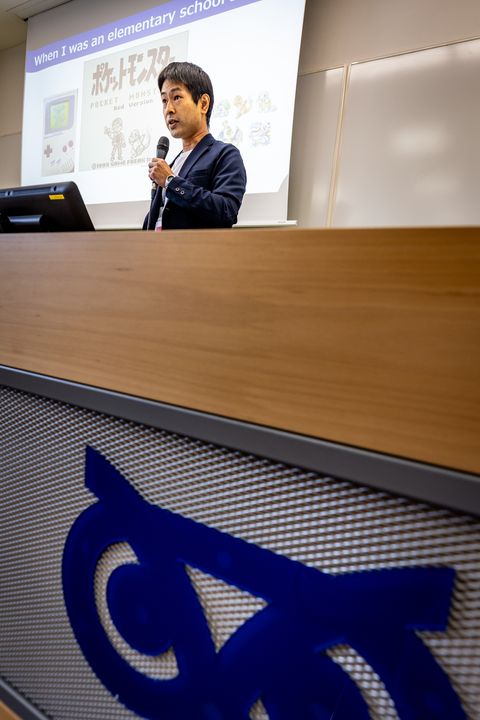
His path to the topic also has a personal dimension. In Japan, he grew up at the time when the first Pokémon games appeared. For his generation, they were a fascinating phenomenon. Adults, especially in academic circles, often viewed games only negatively at the time, as the opposite of healthy outdoor activity. Koshizawa returns to this experience not in order to set games against sport, but to show that they may contain elements that are important for sporting performance as well. “Fast-paced competitive games include important elements, especially early visual processing,” the neuroscientist emphasises.
His year in Prague was not only a professional episode. He came to the Czech Republic with his family and repeatedly says that he is taking away not only data and academic contacts, but also a profoundly human experience. “I love this country and this university,” he says, almost moved, speaking of the Czech Republic and Charles University. “Not only the environment, but also the people. They are warm, kind and open. And it is not just my impression. My family feels the same way,” he says. During their stay, his children made Czech friends and even learnt a little Czech. Ryo himself had time to get to know Prague and other places in the Czech Republic, taste Czech beer and go to an ice hockey match.
And would he like to continue working with Charles University? “I very much hope this research will not end. I hope the connection with Charles University and the Centre for Esports will continue,” he says without hesitation, praising the Faculty of Physical Education and Sport for giving him the space to develop the methodology of his research. It is research that brings together worlds which are perhaps still too often kept apart: traditional sports and digital games, as well as distant Japan and the Czech Republic.